

East District Schoolhouse
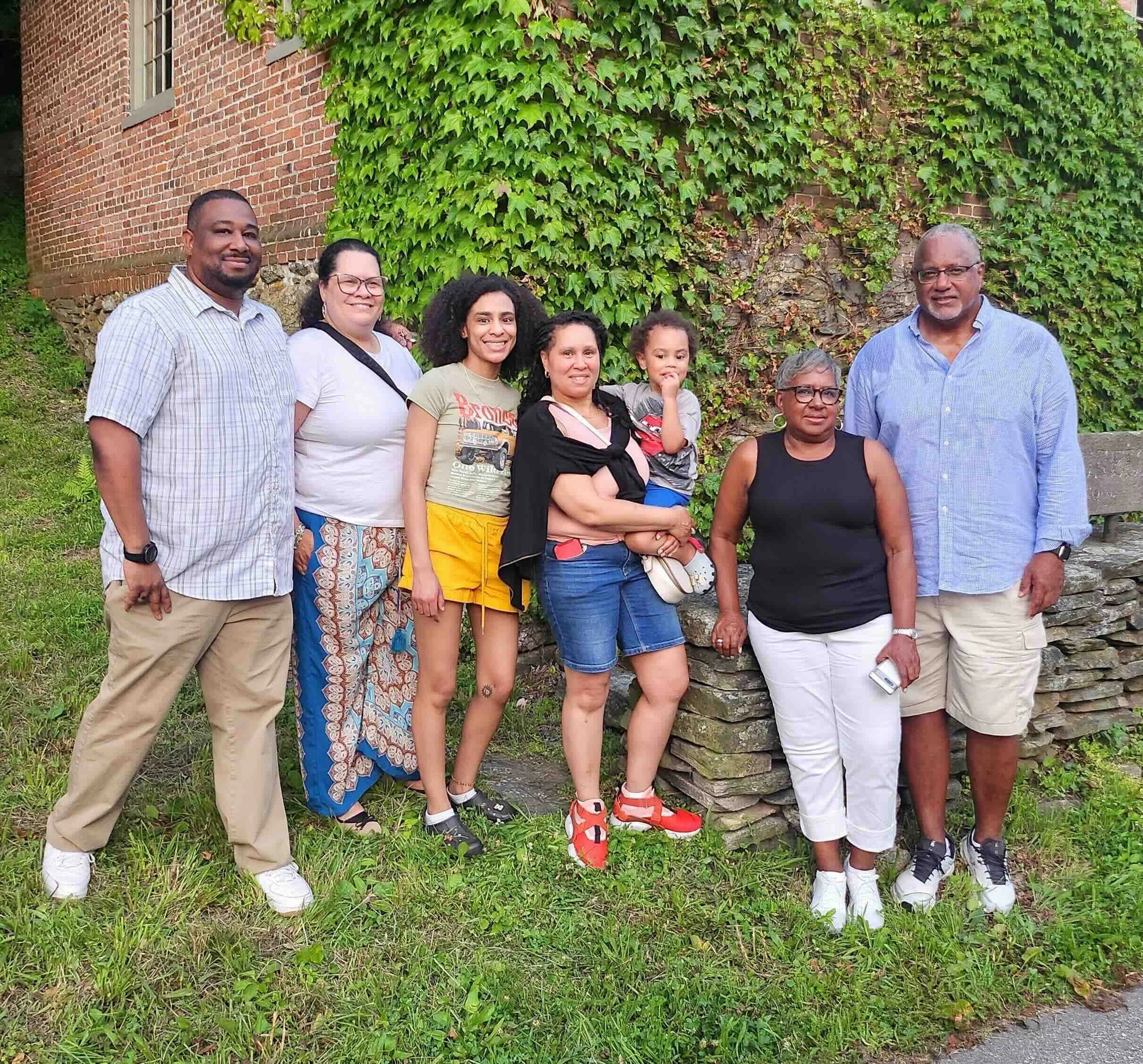
History of the Schoolhouse
The East District Schoolhouse is one of Norwich's surviving connections to the early history of public education in Connecticut. Built near the end of the eighteenth century, the small brick schoolhouse also holds a remarkable connection to Primus Armes, a formerly enslaved African whose life story was preserved through the writings of one of Connecticut's most celebrated nineteenth-century authors, Lydia Huntley Sigourney.
According to Mary E. Perkins's Old Houses of the Antient Town of Norwich, 1660–1800, published in 1895, the schoolhouse traces its origins to December 1789, when Thomas Leffingwell IV conveyed a parcel of land to the inhabitants of the East School District for six pounds. The property, situated north of the Williams house, was purchased specifically for the construction of a school and its continued use for educational purposes.
A brick schoolhouse was erected shortly thereafter, although Perkins acknowledged that its precise construction date and the identities of its earliest teachers were unknown.
The interior was modest, with unpainted desks and benches arranged along three walls. The fourth side contained a recessed area for the teacher's desk, a closet for books, a water pitcher, and a large fireplace that provided warmth during the cold New England winters.
Among the school's earliest pupils was Lydia Huntley, later known as Lydia Huntley Sigourney (1791–1865), the prominent American poet and author. Perkins places her attendance at approximately 1795, when she was just four years old. By 1798, the schoolhouse was also being used for evening instruction.
In Chapter VI of her 1824 book, Sketch of Connecticut: Forty Years Since, Lydia Sigourney described Primus as an elderly African who had survived capture, the transatlantic slave trade, and enslavement in Connecticut. His home stood beside a rocky ledge near the brick schoolhouse.
Sigourney wrote that the schoolchildren frequently visited the man they affectionately called "Father Primus." He welcomed them into his home, sometimes rewarding well-behaved visitors with walnuts. More importantly, he shared stories from his extraordinary life.
The children listened as Primus recounted his childhood in West Africa, his violent separation from his mother at approximately ten years of age, his reunion with his father among other captives, and the horrors they endured aboard a slave ship crossing the Atlantic. His father did not survive the voyage.
Sigourney described the profound emotional effect these stories had upon the children, who were moved to tears upon learning that Primus had once been a child like themselves when he was taken from his homeland and forced into slavery.
Primus also shared his extensive knowledge of the Bible. A respected member of the local Congregational Church, he possessed such an extraordinary memory for Scripture that Sigourney described him as a "living concordance."
In this way, the East District Schoolhouse became connected to an education that extended far beyond its classroom walls. Through their visits with Primus, children encountered a firsthand account of the Atlantic slave trade and the humanity of a man who had endured enslavement.
By the time Sigourney published her account in 1824, Primus's home had disappeared, although she reported that the brick schoolhouse remained standing. Perkins later documented the continued use of the building by successive generations of teachers and students during the nineteenth century.
Who was Primus Armes?
Primus Armes was captured in The Gambia in the early 18th century, taken from his mother, and forced onto a slave ship—where he discovered his father had also been captured. His father died during the brutal Middle Passage, and Primus arrived in America alone.
In New York, he was sold to Ebenezer Lathrop of Norwich, Connecticut.
Enslaved for most of his life, Primus and his wife Venus had two children, Job and Flora, born in the 1750s.
A Legacy of Service and Survival
Job, Primus’s son, fought in the Revolutionary War while still enslaved. He served in Colonel John Durkee’s Regiment under Captain Jedidiah Waterman and was present at the Battle of Trenton. Despite his service, Job returned to Norwich still enslaved.
Disturbed by this injustice, a Norwich resident named Caleb Huntington purchased Job’s freedom and wrote:
“From a principle that no man can justly be reduced to a state of slavery… do therefore by these presents fully manumit said Job; giving him full liberty to go free.”
After gaining his freedom, Job purchased the freedom of his wife Sylvia. However, he was unable to free their one-year-old son, Job II, who remained enslaved for another 26 years.
Generations That Followed
In 1806, Job II had a son named Luke. Around 1833, Luke moved to New Haven, Connecticut, where he married Eleanor Curry. Their son, Daniel Stanley Lathrop, would go on to serve as a Quartermaster Sergeant in the 29th Connecticut Colored Regiment during the Civil War.
Daniel’s image is etched into the monument honoring the regiment at Criscuolo Park in New Haven.
From left to right, the image of Sergeant Major Horace Loudon and Quartermaster Sergeant Daniel Stanley Lathrop. This image is etched into the centerpiece of the 29th Connecticut Colored Regiment Monument at Criscuolo Park in New Haven, CT.
Why This Story Matters
The life of Primus Armes—and the generations that followed—reflect both the hardships of enslavement and a legacy of resilience, service, and contribution to the nation.
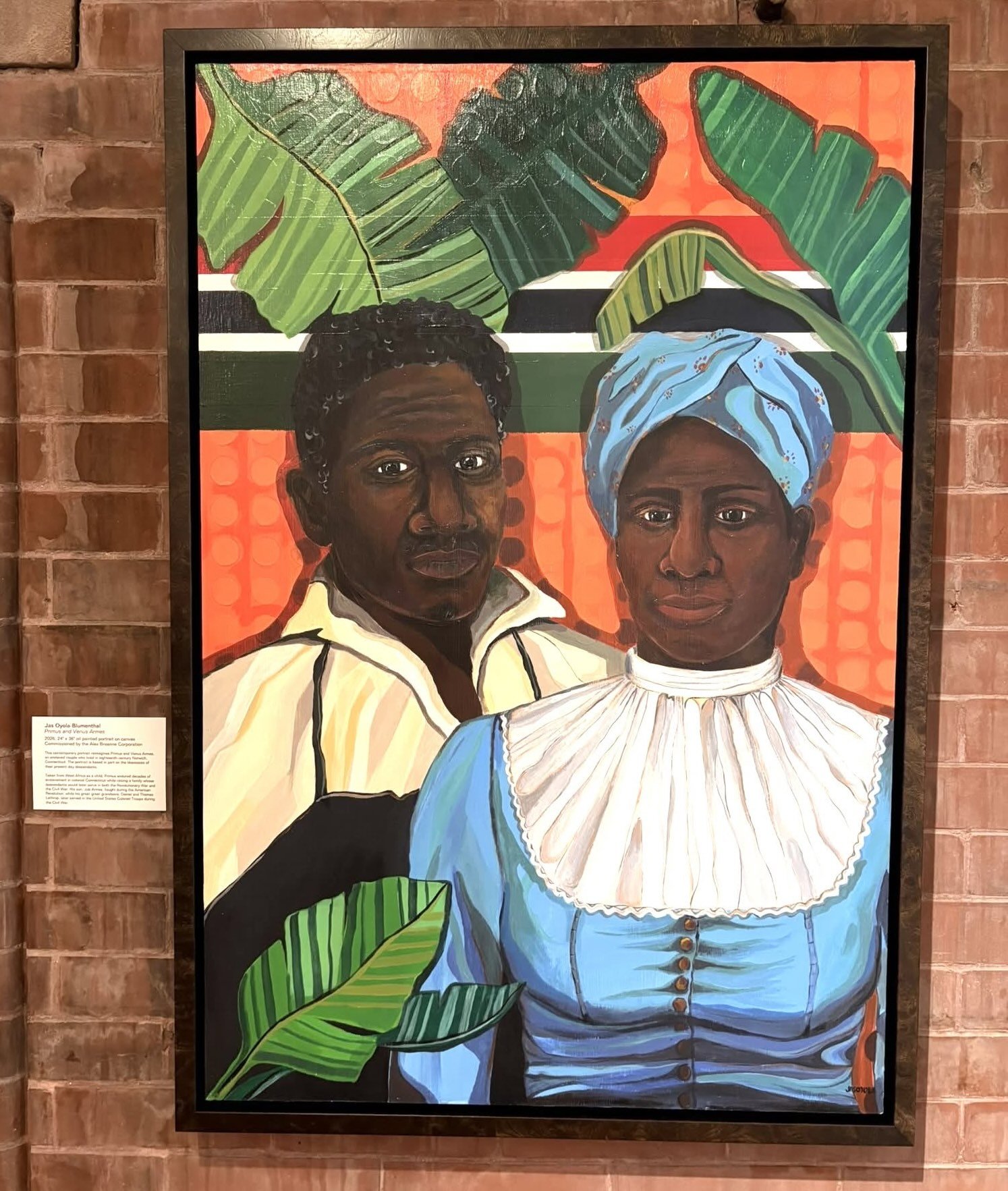
This mural stands as an act of reverence, honoring those whose lives helped shape this country, yet whose stories were never fully told.
Who Sponsored the Mural?
Who Created the Portrait of Primus and Venus?
The portrait displayed was designed and created by Jas Oyola-Blumenthal (Norfolk, Virginia). No images of Primus and Venus exist, so Jas used facial features of current-day descendants to form the portraits
Learn More
You can learn more about Primus Armes and his descendants in the book:
The Narrative of Primus by genealogist John Mills
Available on Amazon here.